

Forging and Metalwork
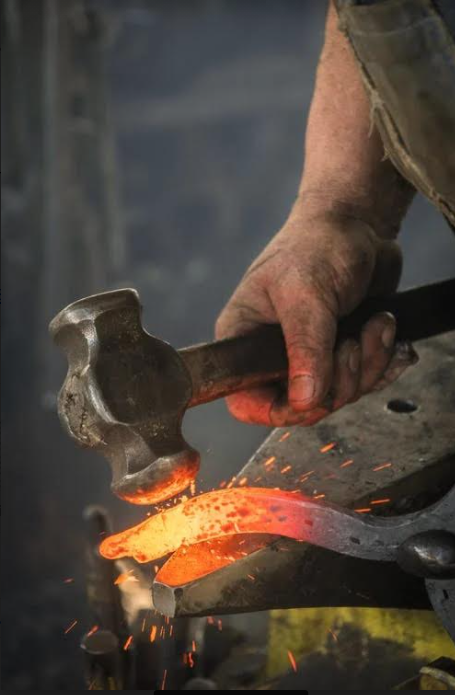
Forging and metalworking are processes where pieces of metal are cut, bent, shaped, joined, or welded to create a desired object. Forging uses heat and a hammer to move metal into the shapes you desire and elements that are forged can be stand-alone or combined. There are benefits to both of these techniques and one of those is having control of the object throughout the entire process. Functional modifications can be made at any time along the process because of this control. We know a good deal about metalworking in particular, but what about forging and forming? Do you know the difference?
There are several types of forging operations that fall under three categories. These are drawn-out forging, upset forging, and squeezed-compression forging. Drawn-out forging is used to increase the length of a piece, upset forging is used to crease the length of a piece, and squeezed-compression forging is used to create a multi-directional flow.
Forming is a metalworking process involving mechanical deformation. With forming, the workpiece is deformed which means no material is added to the piece and none is removed, either. Forming doesn’t change the mass of the workpiece but it does change its shape. There is compressive and tensile forming, as well. Tensile forming uses tensile stress to deform metal pieces. Compressive forming involves rolling and extrusion. Stretching and recessing are also considered tensile forming since they expose metal pieces to stress.
Having control over your workpieces at all times is very valuable for a working process. Forging, forming, and metalworking are all used to manipulate the size and shape of metal pieces and they all have their strengths in production. Each of these techniques is very important in the metal business and is great to know or learn if you are working in these fields or trying to.
Interested in purchasing KAMA products?
Questions?
Contact Us @ 865-671-7682